An open floor plan living room and kitchen gives you light, space, and that effortless flow everyone wants — until you actually have to furnish it. With no walls to tell you where the living room ends and the kitchen begins, a big open box can quickly feel like a furniture warehouse with no plan. The good news: decorating it well comes down to a handful of repeatable rules. And before you move a single sofa, the smartest move in 2026 is to plan it digitally — MyHomeStyler is an AI-powered SaaS platform that lets you create a floor plan and turn it into a photorealistic 3D render in under 60 seconds, so you can test your whole layout before you buy anything.
This guide walks through exactly how to decorate an open floor plan living room kitchen that feels intentional, cohesive, and cozy — zoning, furniture placement, rugs, lighting, color, and the mistakes that make open spaces feel chaotic. Let's get into it.
Start With Zones, Not Rooms
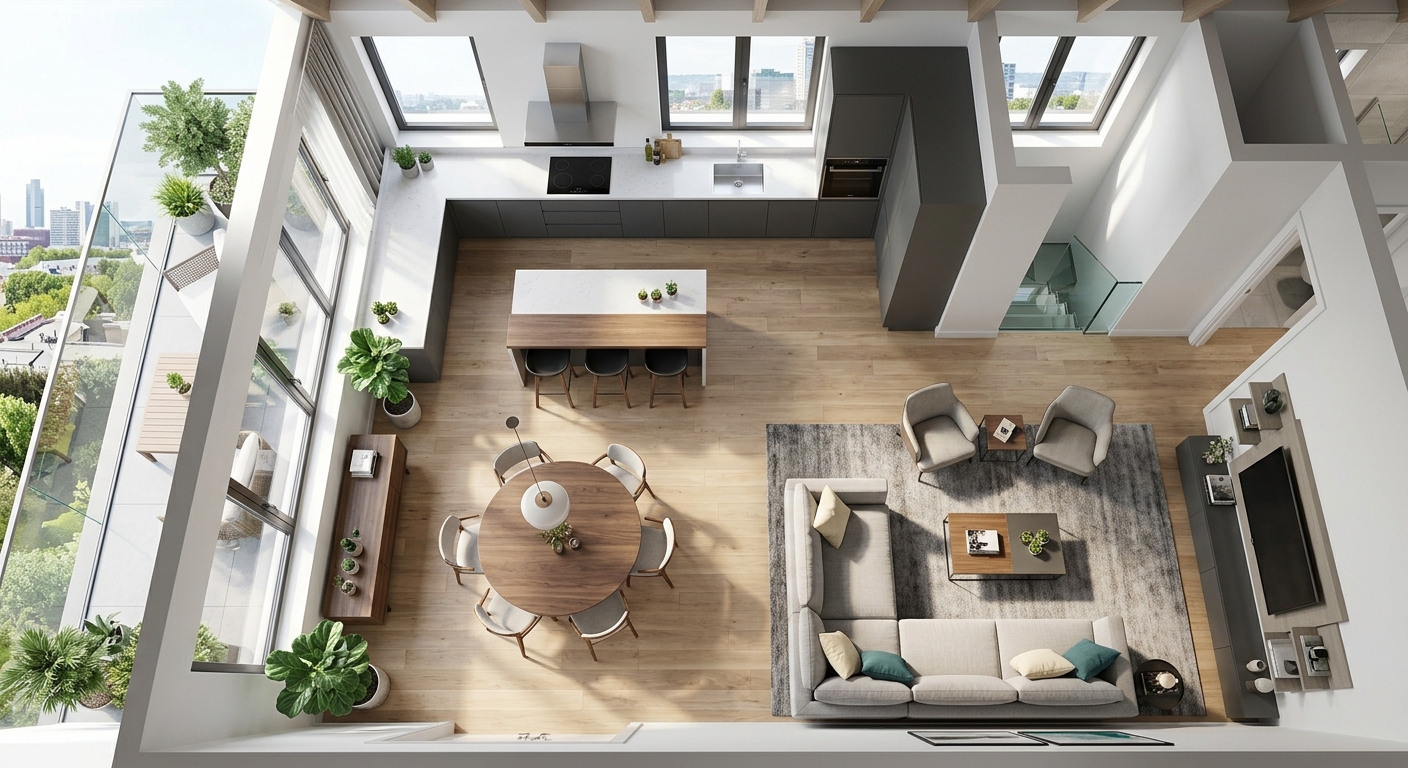
The single biggest mindset shift: stop thinking "one big room" and start thinking "several functional zones sharing one space." A typical open living-kitchen has three or four zones — cooking, dining, lounging, and sometimes a work or entry zone. Decorating becomes simple once you decide where each zone lives and give every one a clear job. Map the zones first; everything else (furniture, rugs, lighting) just reinforces those boundaries.
Anchor Each Zone With a Rug
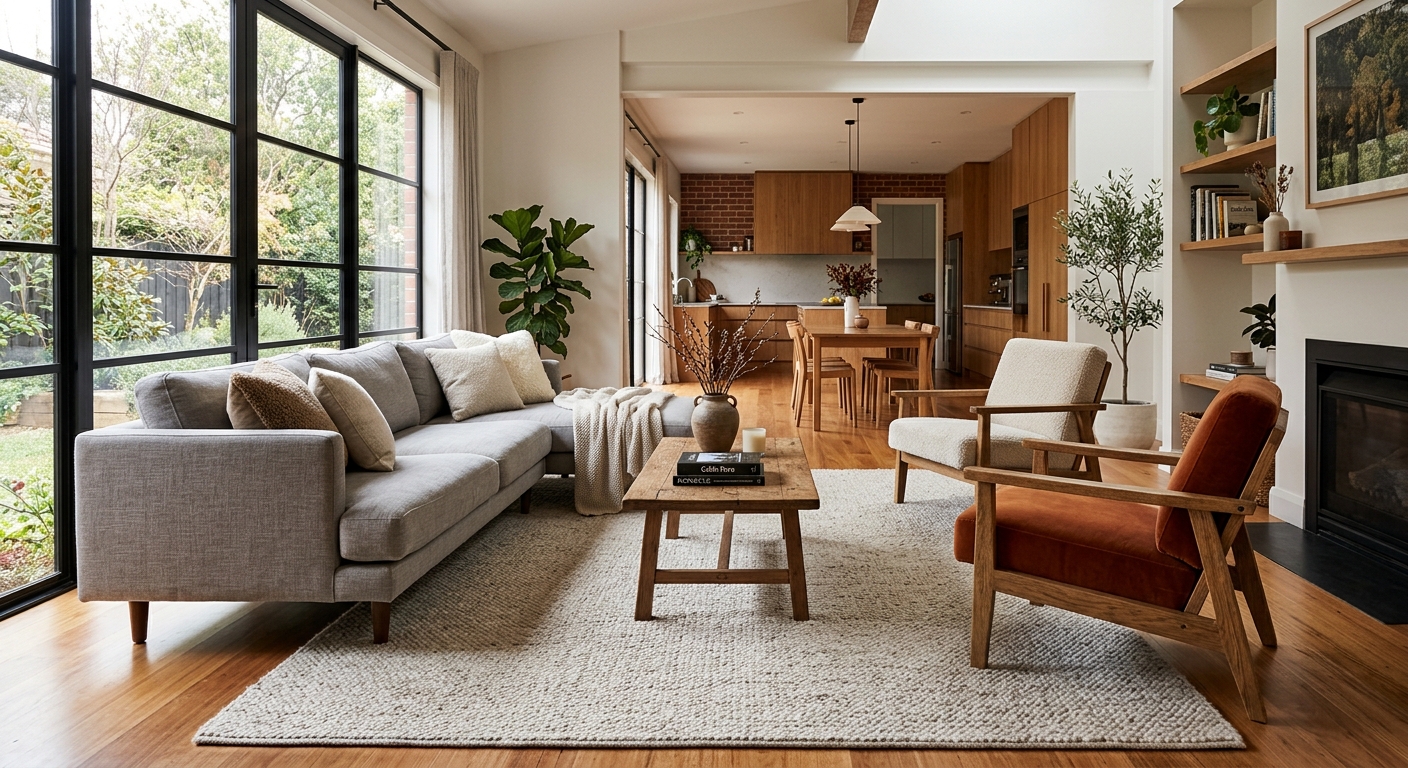
Area rugs are the cheapest, fastest way to visually separate spaces without building walls. A large rug under the living room seating instantly tells the eye "this is the lounge." A runner or smaller rug can define a reading nook or entry. The key rule: go bigger than you think — the front legs of your sofa and chairs should sit on the rug, not float in front of it. An undersized rug makes the whole zone look like an afterthought.
How to Decorate an Open Floor Plan Living Room Kitchen: Furniture Placement
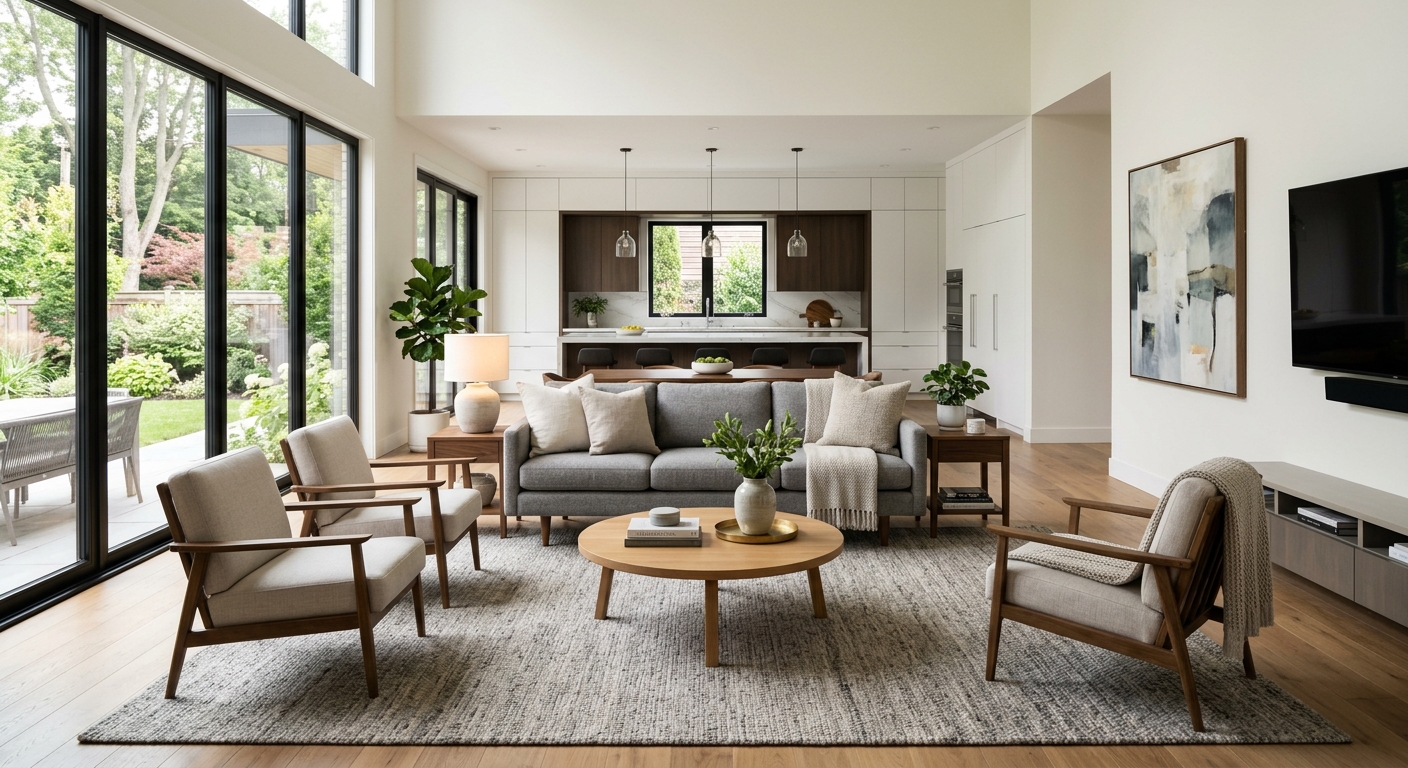
Here's where most people go wrong: they push all the furniture against the walls. In an open plan, that leaves a dead empty void in the middle and no defined zones. Instead, float your furniture:
- Use the sofa back as a divider. Position the sofa with its back toward the kitchen or dining area — it instantly creates a wall that isn't a wall and faces the lounge inward.
- Create a conversation cluster. Pull seating together so people can talk without shouting across the room. Sofa, two chairs, coffee table in the center.
- Leave clear walkways. Keep 30–36 inches of clear path between zones so traffic flows naturally from the front door to the kitchen.
- Use a console table behind the floating sofa to bridge the living and kitchen zones and add storage.
Use the Kitchen Island as a Natural Divider
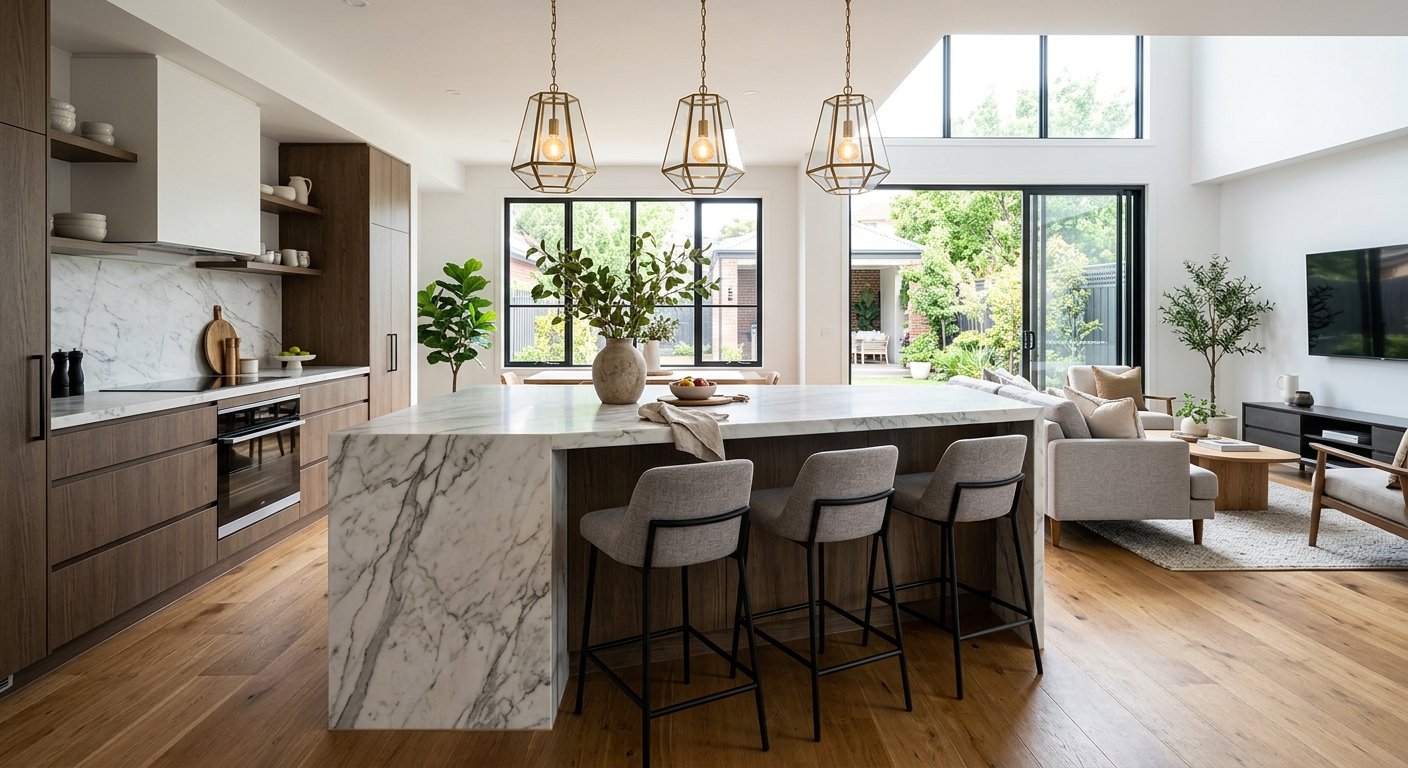
If you have an island, it's already doing half the zoning work for you. The island is the natural border between the cooking zone and the living/dining zones. Lean into it: add counter stools to turn it into a casual eating and gathering spot, and treat the side facing the living room as a finished surface (paneling, a waterfall edge, or a contrasting color) so it looks intentional from the lounge side, not just like the back of a cabinet.
Tie It Together With a Cohesive Palette
Because you see the whole space at once, a unified color and material palette is non-negotiable. Pick one cohesive palette and repeat it across both zones — the same wood tone in the kitchen and the living room shelving, a metal finish that appears in both the lighting and the hardware, an accent color carried from a kitchen backsplash into living-room throw pillows. If you're choosing wall colors too, our full guide on how to transition paint colors in an open floor plan covers exactly where to stop and start each color. For coordinated palettes that are guaranteed to work together, paint makers like Benjamin Moore publish ready-made color collections.
Layer the Lighting Zone by Zone
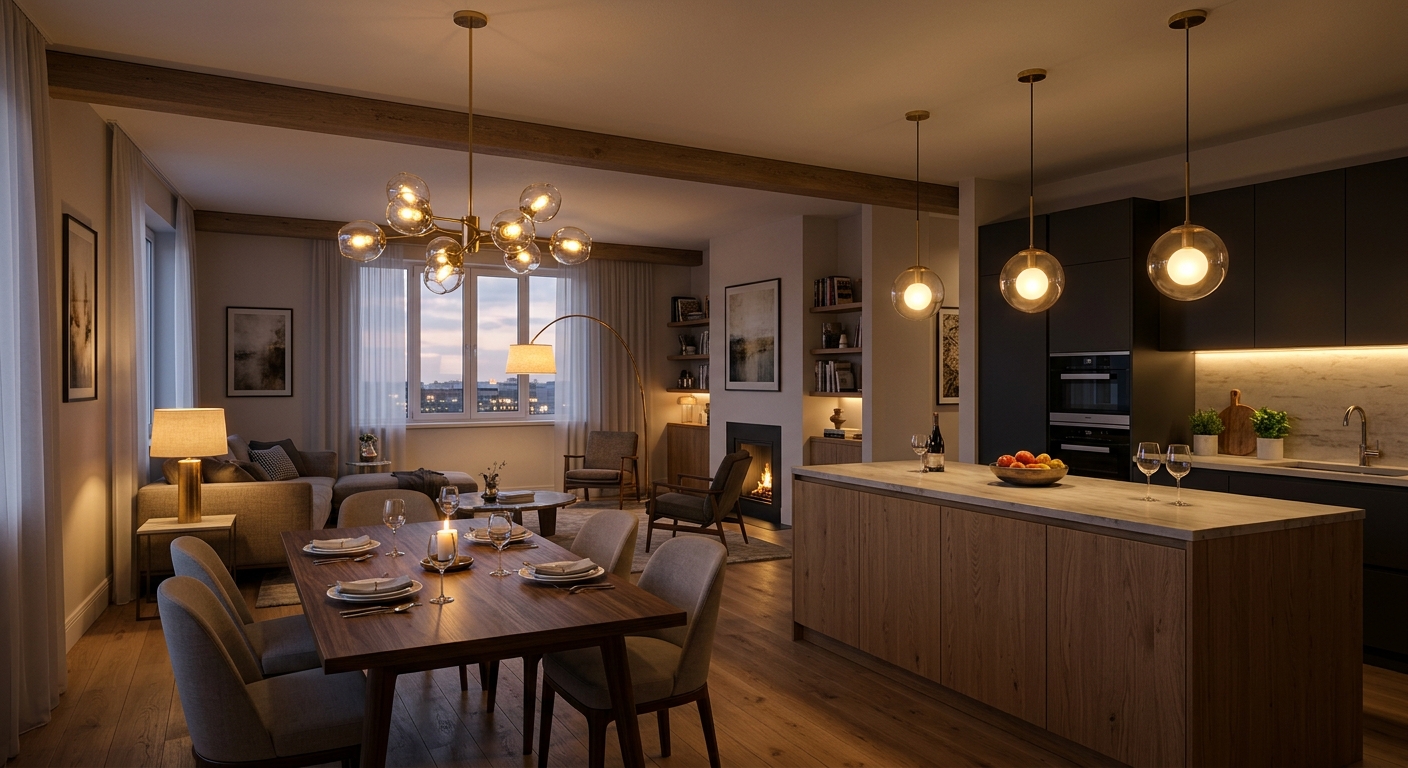
One ceiling light for the whole open plan is a classic mistake — it flattens the space and erases your zones. Instead, give each zone its own lighting layer:
- Kitchen: task lighting — pendants over the island, under-cabinet strips.
- Dining: a statement fixture centered over the table to anchor the zone.
- Living: ambient and accent — floor lamps, table lamps, and a warm glow rather than overhead glare.
Distinct pools of light do the same job as walls: they tell your eye where one zone ends and the next begins.
Make a Big Open Space Feel Cozy
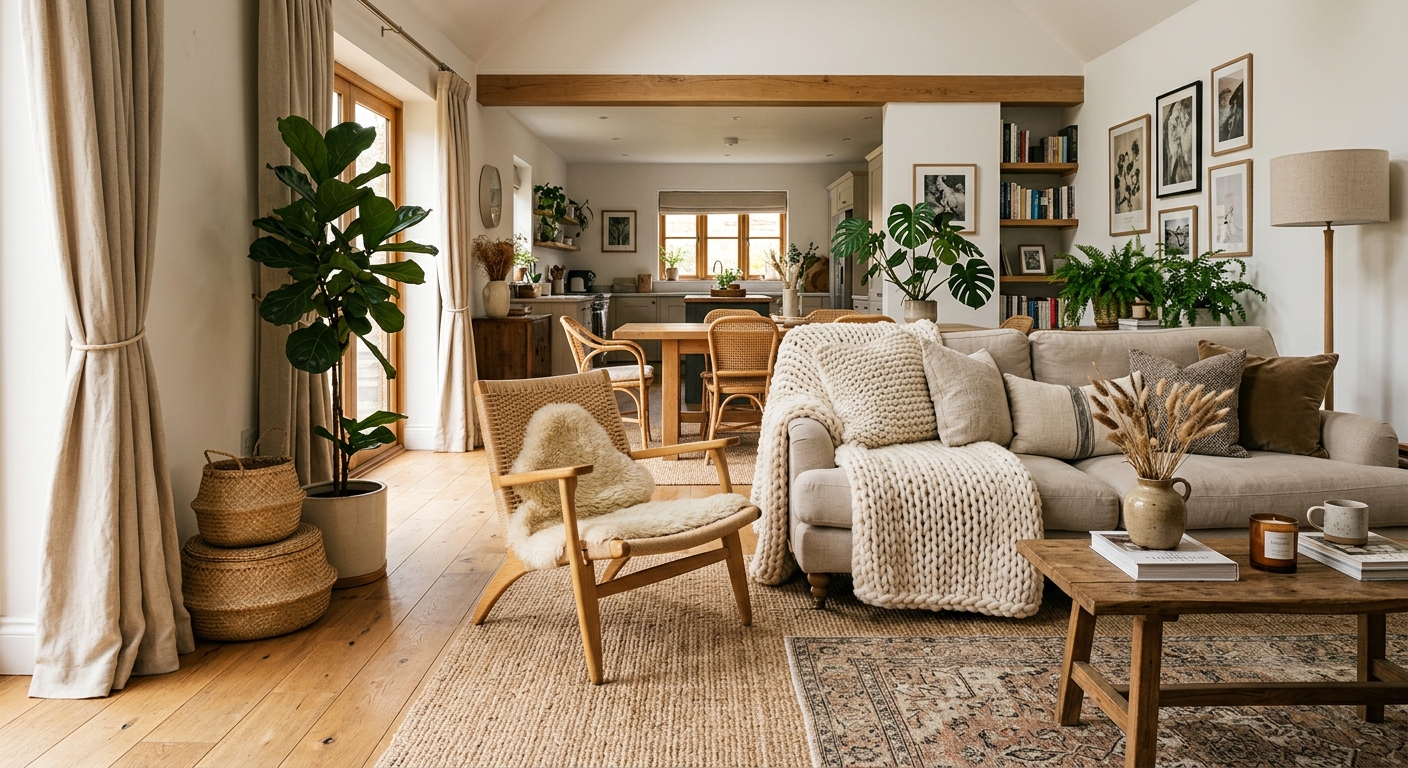
Large open plans can feel cold and echoey. Warm them up with texture and softness: a chunky knit throw, layered cushions, a tall plant to fill vertical emptiness, woven baskets, and natural materials like wood and rattan. Drapes that run floor-to-ceiling soften hard architecture and add height. The goal is to break up the hard surfaces of the kitchen with the soft, layered comfort of a living room so the two zones feel like one welcoming home.
Common Open-Plan Decorating Mistakes
- Furniture against every wall. Leaves a dead center and zero defined zones — float it instead.
- Rugs that are too small. The fastest way to make a zone look unanchored and cheap.
- No focal point. Give the living zone a clear anchor — a TV wall, fireplace, or art piece.
- One lonely ceiling light. Layer lighting per zone instead.
- Too many competing styles or colors. Repeat one palette and one design language throughout.
- Buying before planning. Oversized or wrong-scale furniture is expensive to return.
Plan Your Layout in 3D Before You Buy
This is where it gets easy and risk-free. Instead of guessing whether that sectional fits or whether the island reads well from the sofa, you can see the finished space first. MyHomeStyler is built exactly for this — the fastest way to create a floor plan or turn an existing one into a photorealistic 3D render with AI. Upload your layout, place your zones, test furniture arrangements and color schemes, and know it works before you spend a cent on furniture.
Frequently Asked Questions
How do you separate a living room and kitchen in an open floor plan?
Use zoning tools instead of walls: an area rug under the living room seating, the back of a floating sofa as a divider, a kitchen island as a border, and distinct lighting for each zone. Together they define separate spaces while keeping the open flow.
Where should the sofa go in an open concept living room kitchen?
Float the sofa with its back toward the kitchen or dining area so it creates a soft divider and faces the seating inward. Anchor it on a large area rug and add a console table behind it to bridge the two zones.
How do I make an open floor plan feel cozy?
Add texture and warmth — layered cushions, a chunky throw, floor-to-ceiling drapes, plants, and natural materials like wood and rattan. Use warm, layered lighting (lamps, not just overhead) and keep furniture clustered for conversation rather than spread out.
What size rug do I need for an open plan living room?
Bigger than you think. The rug should be large enough that at least the front legs of every seating piece sit on it. A common size for open-plan living zones is 8×10 or 9×12 feet; too-small rugs make the zone look disconnected.
Can I plan my open floor plan layout before buying furniture?
Yes. AI visualization tools let you upload your floor plan and generate a photorealistic 3D render with furniture and color applied, so you can test arrangements before purchasing. MyHomeStyler does this in under a minute at $9.99/month with no watermarks.
The Bottom Line
Knowing how to decorate an open floor plan living room kitchen comes down to one idea: define your zones, then use rugs, floating furniture, the island, a shared palette, and layered lighting to reinforce them. Do that and a big open box turns into a series of inviting, purposeful spaces that still flow as one home.
And the surest way to nail it on the first try is to see it before you buy. Map your zones, drop in furniture, and preview the whole thing in 3D.